
Start a Statesboro People Search
Statesboro is the Bulloch County seat, so the strongest public name trails do not all sit in City Hall. The city keeps council, license, permit, police, municipal election, and municipal court material. County offices keep deeds, superior and state court files, estates, marriages, tax parcels, and voter administration. Georgia systems add business, license, corrections, vital-record, and statewide filing indexes.
Choose the first search from what is known. A current or old street address points to the property roll. A lawsuit or charge belongs with the court that heard it. A death, old household, or family tie calls for an obituary, directory, probate file, or vital-record request. Keep each record number because it makes an offline request much more precise.
- Search the Bulloch property roll by owner or location when a name or address is known.
- Use the deed index to confirm who transferred title and when.
- Check the right court, then request the public filing from its clerk.
- Use local directories and newspapers to link older residents with an address.
- Send a narrow request to the actual custodian when the web trail ends.
Note: My Voter Page is a private self-lookup for a known voter, not an open surname search for Statesboro residents.
Statesboro People Records Desks
The Bulloch clerk is both the local court-file keeper and the land-record custodian. Probate Court holds estates, wills, guardianship matters, and marriage records. The City Clerk preserves Statesboro ordinances, minutes, ledgers, and administrative records. These are separate custodians. A generic county request will not always reach a court file, and a City Hall request will not produce a county deed.
Bulloch Probate Court
2 North Main Street, Suite 103
Statesboro, GA 30458
912-489-8749
The Bulloch clerk source page is shown below with its request routes and service links.
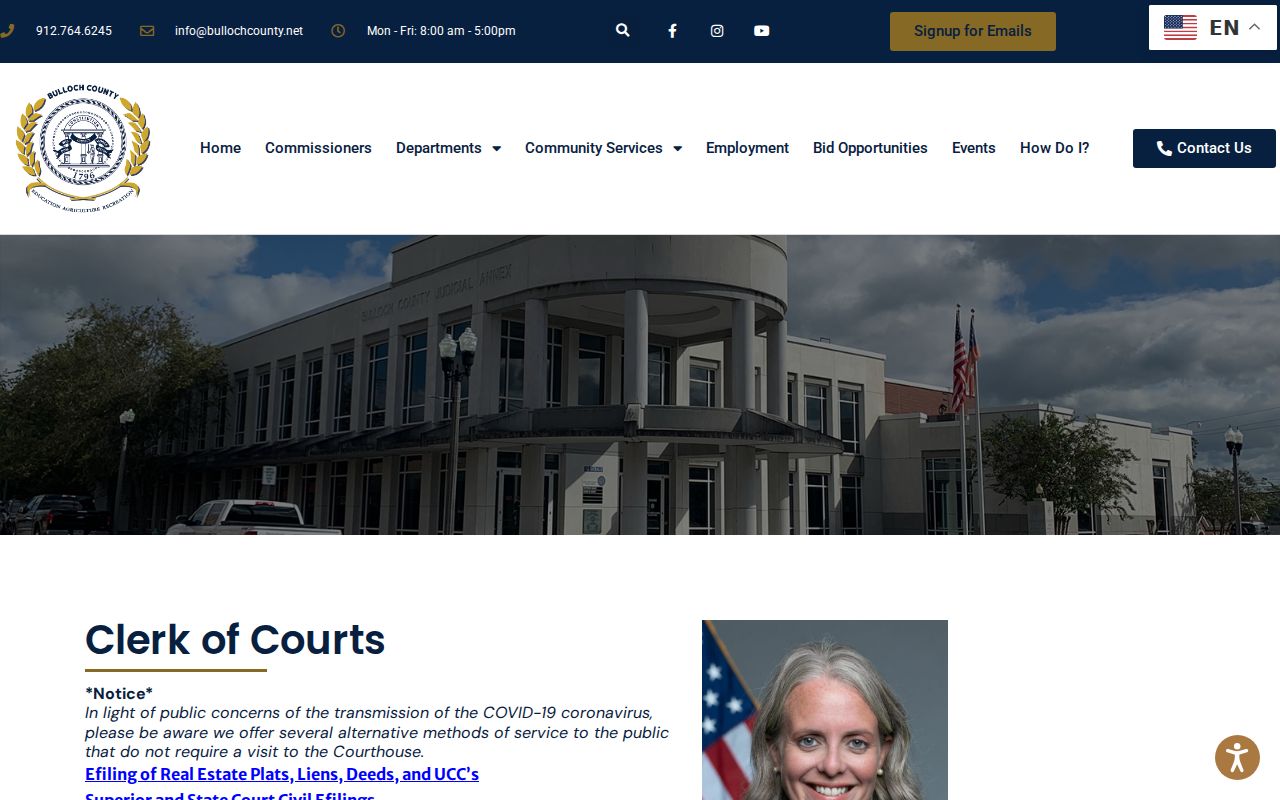
The page is a routing point. The clerk still holds the underlying county record when a statewide service supplies the search screen.
Statesboro Property Name Lookup
The Bulloch Board of Tax Assessors maintains the current parcel roll. Its qPublic application supports the practical path from owner name or location to a parcel. The City of Statesboro also tells zoning researchers to select Search Records, open a result, choose Map It, and turn on the Zoning layer. City planning remains the final source for zoning verification.
| Search control | Use in a people search | Limit |
|---|---|---|
| Owner name | Find parcels tied to a person or entity | Spelling and entity ownership can hide a match |
| Location or address | Connect a street site to its tax parcel | Situs and mailing addresses can differ |
| Parcel number | Carry one property across tax, map, and deed work | Use the displayed format |
| Map It and Zoning | Place the parcel and view the city layer | Confirm zoning with city staff |
A tax name reflects the January 1 owner used for assessment. If a sale occurred later, move to the clerk's deed index. A missing public result is not proof that no property exists, since entity ownership and protected identity display can affect the result.
Trace Statesboro Deed Names
The Georgia Superior Court Clerks' Cooperative Authority search hub brings together real-estate, lien, plat, UCC, notary, and civil-filing searches.
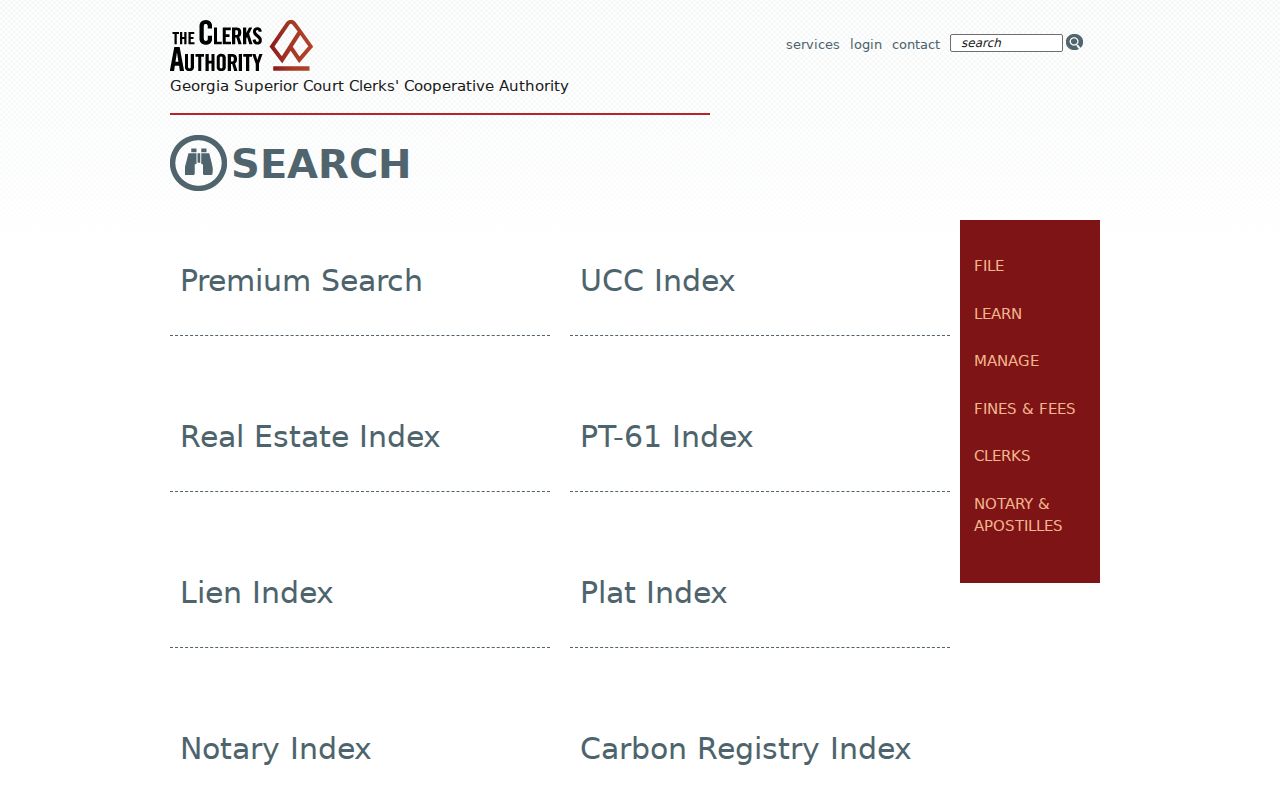
The hub helps discover a filing, but an index entry is not the deed or a certified copy. Exact Bulloch online start dates were not published in the reviewed source, and some images or premium functions can require an account or fee.
- Grantor
- The person or entity transferring an interest.
- Grantee
- The person or entity receiving that interest.
- Plat
- A recorded drawing that identifies land boundaries.
- Book and page
- The clerk's citation for finding a recorded instrument.
Follow one parcel through its legal description and book/page reference. A deed proves a transfer of title, while a directory may show who occupied the address. Together they can build a sounder chain of names.
Liens and plats can add context without proving that the indexed person lived at the site. A lien records a claim tied to a person or property, while a plat fixes the surveyed land reference. Search spelling variants and both party roles, then give the Bulloch clerk the document type and index citation if the image is not available online. That keeps a Statesboro search tied to the recorded instrument instead of a bare name match.
Search Statesboro Court Records
There is no verified, complete, free statewide trial-court name database for every Statesboro case. The Georgia E-Access router sends users to participating provider systems, and it warns that provider access may require an account.
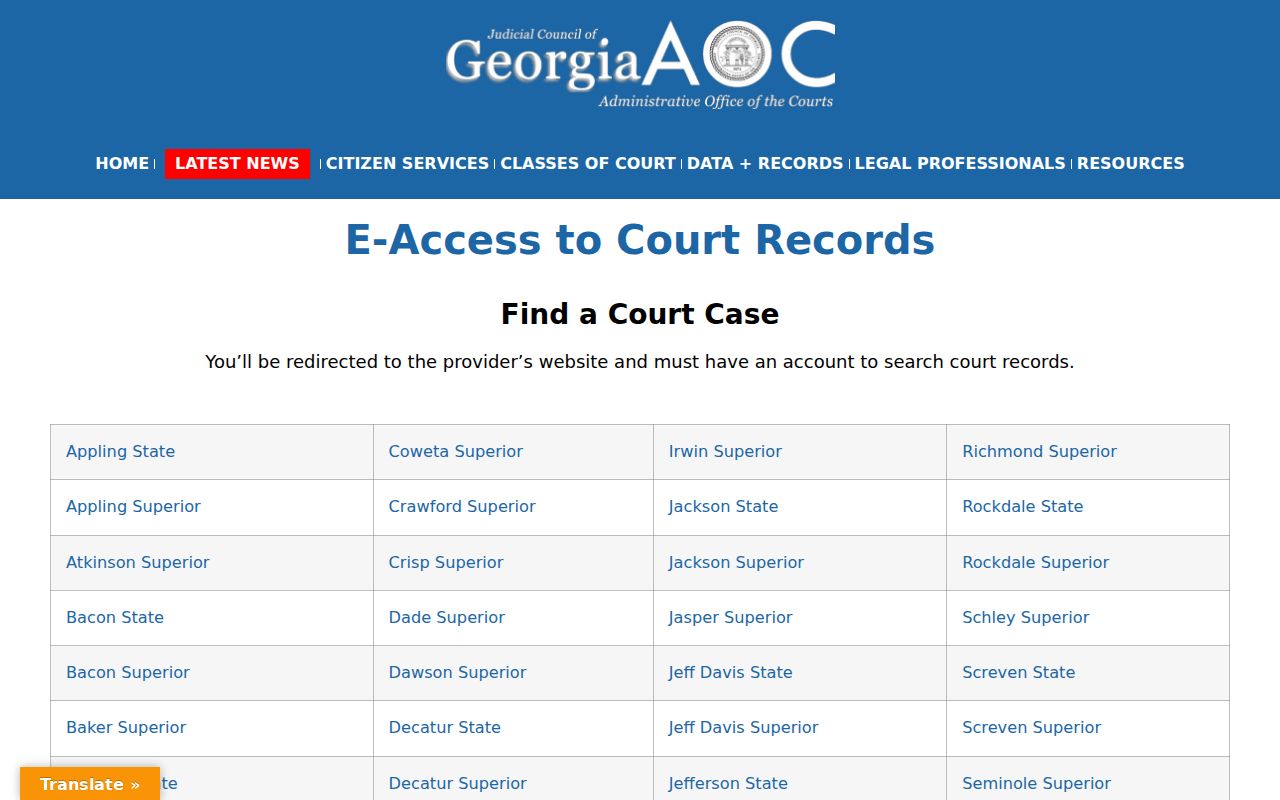
For Bulloch Superior and State Court records, use the clerk at 20 Siebald Street. Supply the party name, case number if known, court, and desired filing. The clerk states that emailed requests are processed in three to five business days. Juvenile, sealed, and other protected files are not ordinary public records.
| Court | Typical record | Best route |
|---|---|---|
| Bulloch Superior | Felony, divorce, title, general civil | Bulloch Clerk request |
| Bulloch State | Misdemeanor, traffic, civil | Bulloch Clerk request |
| Magistrate or Probate | Small claims, warrants, estates | Contact that court |
| Statesboro Municipal | City ordinance and traffic matters | Municipal Court contact |
Statesboro Municipal Case Requests
No official public name-search form was verified for Statesboro Municipal Court. Contact the court instead of assuming a county or state portal includes city ordinance cases. The Statesboro Municipal Court page identifies the direct city channel.
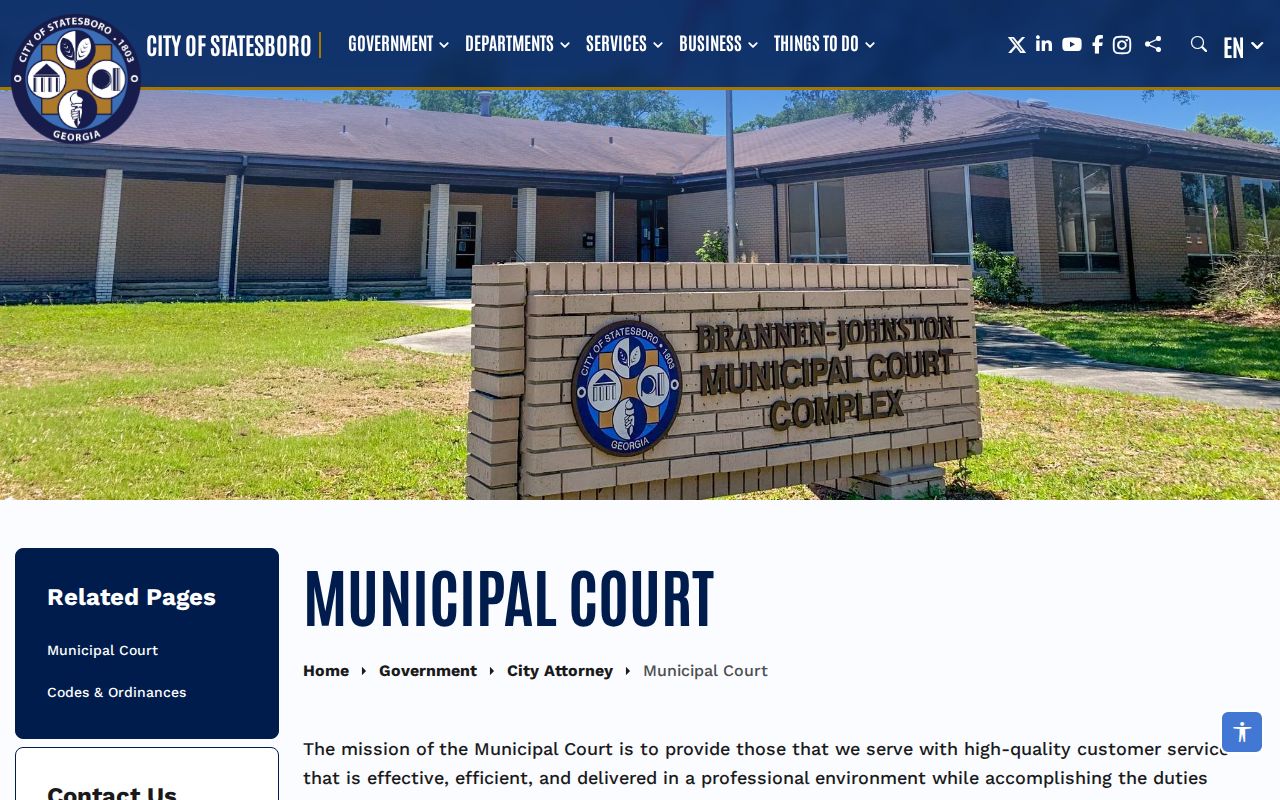
Give the clerk a full name, citation or case number, and a narrow date range. Ask whether the docket entry and desired filing are public. This avoids mistaking a missing online hit for a missing municipal case.
Note: A docket is the court's event list for a case; it does not contain every fact found in the filed documents.
Statesboro Vital Records Search
Georgia DPH keeps statewide births and deaths from January 1919 forward. The Bulloch County Health Department is the local vital-record office. Certified birth and death copies require a direct and tangible interest under O.C.G.A. § 31-10-26, which DPH describes through the registrant, immediate family, or legal representative routes. Do not assume old certificates become public after a simple number of years because the official sources reviewed did not state such a rule.
Bulloch Probate Court handles local marriage licenses and records. DPH holds marriage records for 1952 through 1996; other years go to the county probate court. Divorce decrees come from the Bulloch Clerk of Superior Court, while DPH can provide a confirmation rather than the decree itself.
The official ROVER ordering portal displays Georgia's birth and death order choices and eligibility notices.
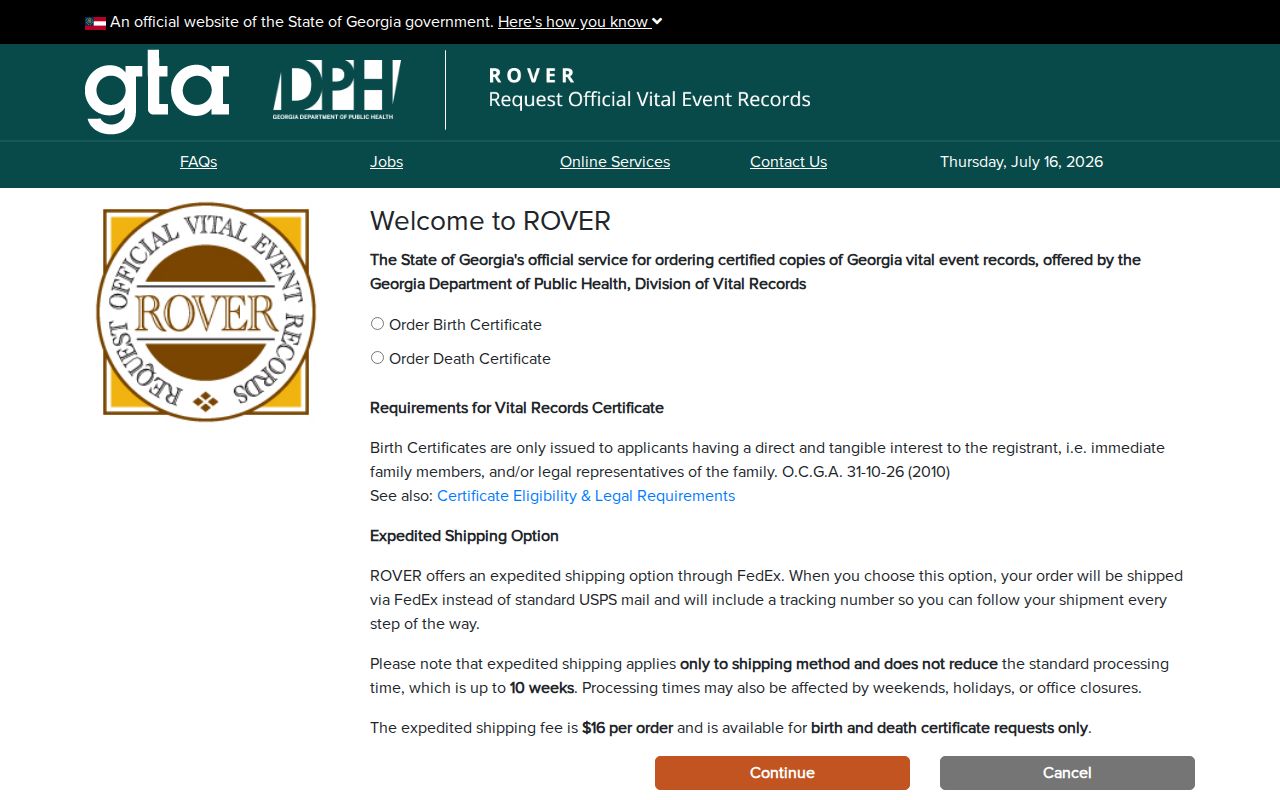
The portal is an order channel, not a public name index. Mail and eligible local walk-in routes remain useful when online ordering does not fit the request.
Statesboro Business People Search
A company name can lead to a person through Georgia's Corporations Division. The official entity search can be queried by business name, control number, registered agent name, and officer name. Results can show the entity name, type, status, principal office address, registered agent, and filing history. Filed documents and certificates are separate from the free index.
Search both a trade style and likely legal entity name. Then compare the registered agent or officer with Bulloch deeds and local occupational-tax records. Statesboro publishes license forms and renewals but did not advertise a browsable public licensee roster, so a narrow City Clerk request is the fallback for a named local certificate.
Professional licenses use the Georgia Secretary of State verification system, with profession, license type, number, first name, last name, city, state, and county fields. A public status should be checked against the issuing board if a consequential fact depends on it.
Statesboro Corrections Name Search
The Georgia Department of Corrections offender query supports search modes based on name, physical description, GDC identifier, or case number.
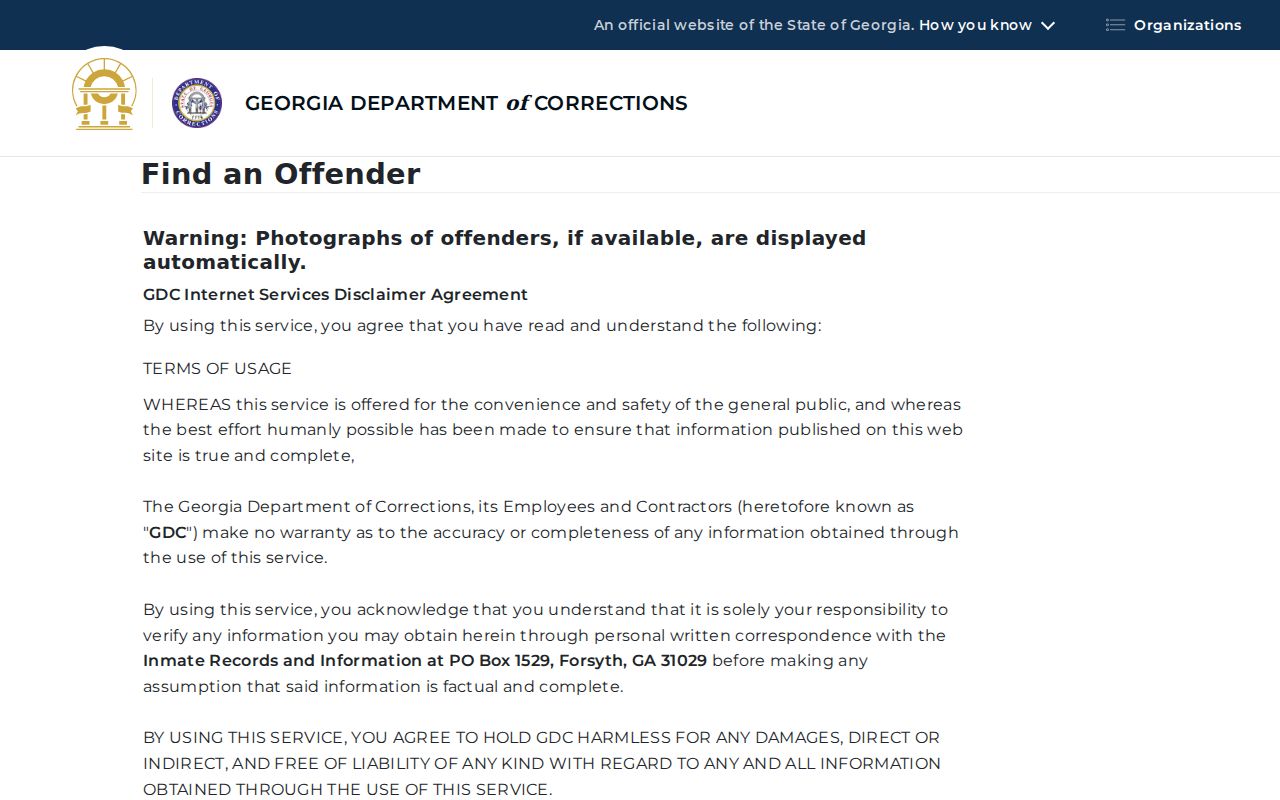
The query covers the state corrections system, not every person held in the Bulloch County jail. GDC warns that records can change and directs users to Inmate Records for verification. A stable official local jail roster and complete field list were not verified, so current county custody questions should go to the Bulloch County Sheriff's Office.
The GBI registry is a separate statutory system under O.C.G.A. § 42-1-12. Source agencies update it, and the agency warns that a missing or stale entry can have several causes. Use either system for lawful personal safety and record verification, never to harass a person.
Federal custody follows another route. The Bureau of Prisons locator searches by federal identifier or by name with age, race, and sex filters, and its general electronic coverage begins in 1982. Older federal custody research goes to the National Archives. Keeping county jail, Georgia corrections, and federal custody systems separate prevents a false negative caused by searching the wrong jurisdiction.
Statesboro Voter Lookup Limits
Georgia My Voter Page lets a voter check their own registration status, polling place, districts, elected officials, sample ballot, and absentee-ballot status after providing identifying data. It is not an open search by surname. Bulloch Elections and Voter Registration at 113 North Main Street handles local registration issues and an address-to-precinct GIS route.
Compiled elector data is a different channel. Georgia excludes such fields as month and day of birth, Social Security number, email, driver-license number, telephone number, and registration-application location from public lists. Commercial use is prohibited. The focused Statesboro voter records resource explains the identity-gated lookup and lawful list-order process without turning the voter roll into a general directory.
Use Statesboro records only for lawful research. Never use a name, address, court record, voter detail, or corrections result to stalk, harass, threaten, or harm anyone.
Statesboro Historical Directory Search
The Digital Library of Georgia Statesboro directory collection is dated 1940 through 2000 and includes searchable scans.
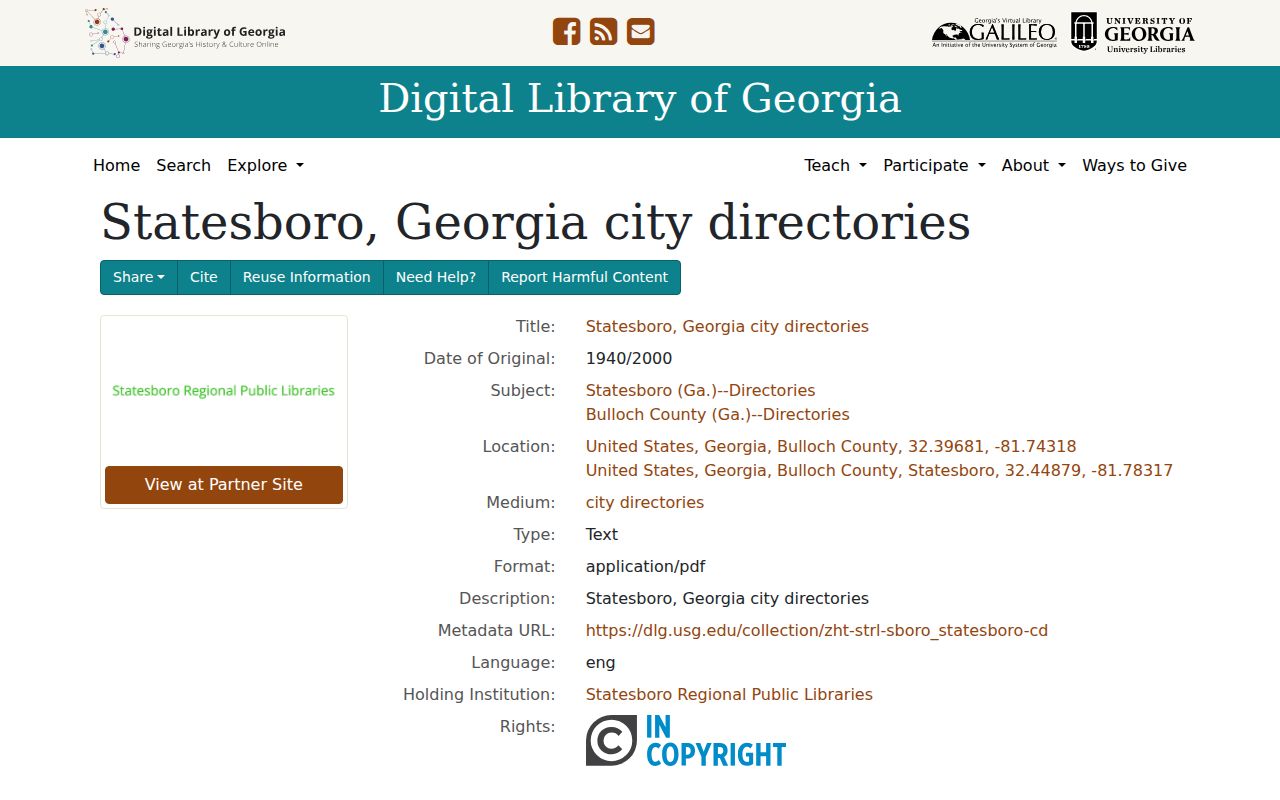
The 1962 R. L. Polk volume shows why these books matter. It includes resident names, spouses, occupations or businesses, street addresses, phone numbers, official lists, and classified entries. It also reaches Collegeboro and rural-route residents, so its geography is broader than a modern downtown address list.
Reverse searching begins with the street section, where available, and then checks each named person in the alphabetical section. Directory evidence shows a listing or occupant, not title. Compare it with a deed, tax roll, obituary, or probate file before concluding that two same-named entries identify one person.
Phone and street formats also change. A rural route in an older Statesboro directory may not map cleanly to a current road label, and an OCR search can misread faint type. Browse nearby scan pages after a text hit, try initials and surname variants, and note neighbors or businesses listed at the same address. Those small details can separate relatives and same-named residents before the trail moves to deeds or newspapers.
Statesboro Archive People Trails
The Zach S. Henderson Library Special Collections portal provides finding aids for Southeast Georgia manuscripts, photographs, newspapers, oral histories, family papers, and Bulloch County Historical Society material.
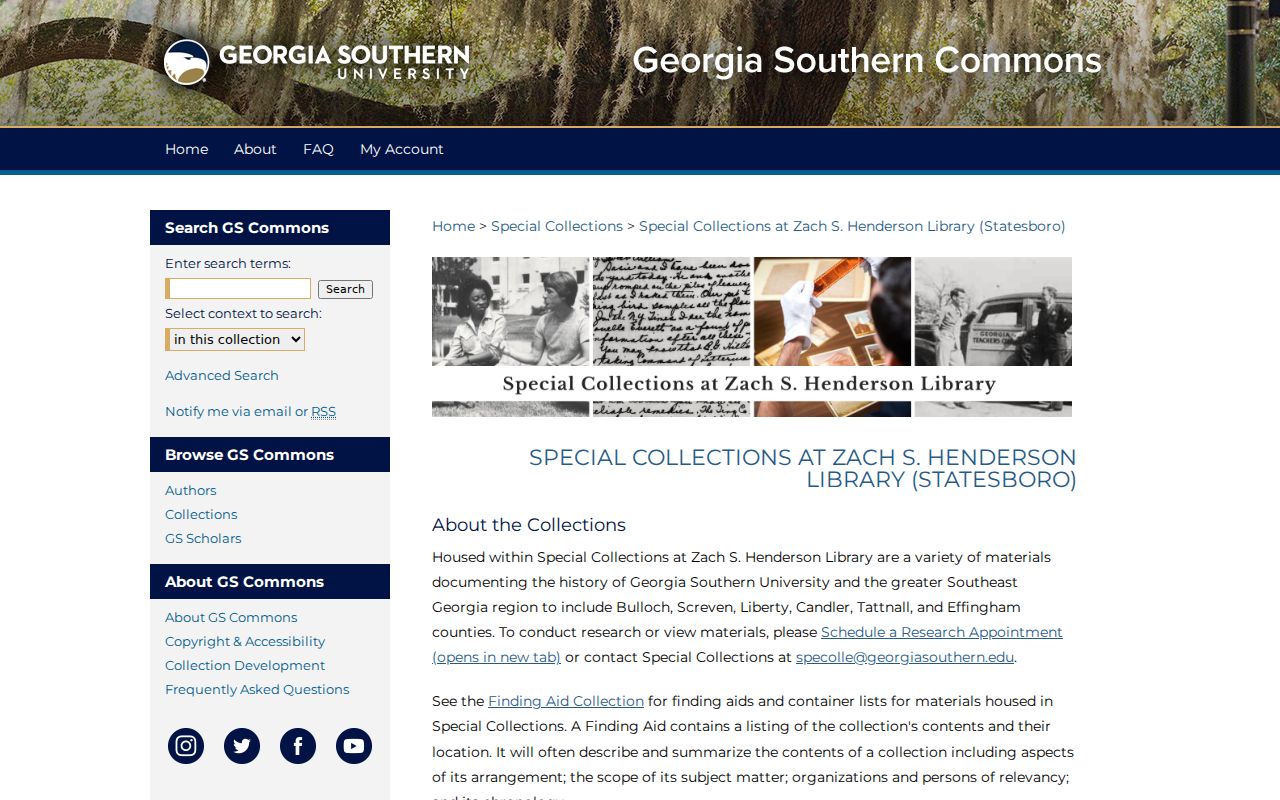
Useful named collections include First Baptist Church Statesboro records from 1882 to 1974, Rotary Club of Statesboro records from 1935 to 2016, and the Bland and Keown Family collection spanning 1864 to 2007. Finding aids tell researchers which box or series may hold a name. Appointment access can then reach items that are not digitized.
Newspapers fill another gap. The university repository groups changing titles from the 1890s onward, while local microfilm reaches back to 1899. Search several title eras, because a missing date under one masthead may simply reflect a title or publication-frequency change.
Check Statesboro Record Matches
Statesboro's university population and high residential mobility raise the risk of false matches. Census estimates for 2020 through 2024 report that only 65.2 percent of residents lived in the same house as one year earlier. A current parcel, campus listing, or license address should not be projected backward without another dated source.
| Official source | Best evidence | Commercial compilation |
|---|---|---|
| Named custodian | Record number, date, party role, source image | May merge data from several sources |
| Current access rules | Public filing or certified copy where needed | May be stale or lack its source date |
| Direct correction route | Office can explain index and copy limits | Must still be checked against the custodian |
Compare middle names, suffixes, age or year of birth where lawfully public, old addresses, parcel descriptions, and the person's role in the record. A grantor, witness, plaintiff, registered agent, and property owner are not interchangeable roles.
When Statesboro Records Go Offline
Save the exact spelling, date, case number, parcel number, deed book/page, and document type from any index hit. Then ask the responsible clerk for an existing electronic copy, a narrow date span, and a cost estimate before work exceeds a stated amount. The Georgia Open Records Act generally requires a response within three business days when immediate production is not practical, but that is an initial response rule, not a promise that all records arrive in three days.
Older work may require the courthouse, Statesboro Regional Public Libraries, Georgia Archives, or Henderson Special Collections. Union troops destroyed Bulloch County's log courthouse in 1864, yet no authoritative series-by-series loss list was located. Do not treat all earlier county records as lost. Search surviving deeds, probate, tax, church, newspaper, cemetery, and reconstructed sources.
A careful fallback chain often finds what a single portal cannot: online index, custodian request, courthouse volume, library microfilm, and archive finding aid. Each step preserves the record's context and helps distinguish a true gap from a search-system limit.